
When a growing business reaches its operational limits, choosing the right technology partner becomes a top priority. Many organizations turn to Dynamics 365 ERP for its scalability, streamlined operations, and accurate reporting. However, getting the most from the platform requires more than a basic installation.
The success of your Dynamics 365 implementation largely depends on the consulting partner you choose. You are not simply hiring a vendor to set up the software. You are building a long-term relationship with a team that will help manage critical financial, operational, and supply chain processes.
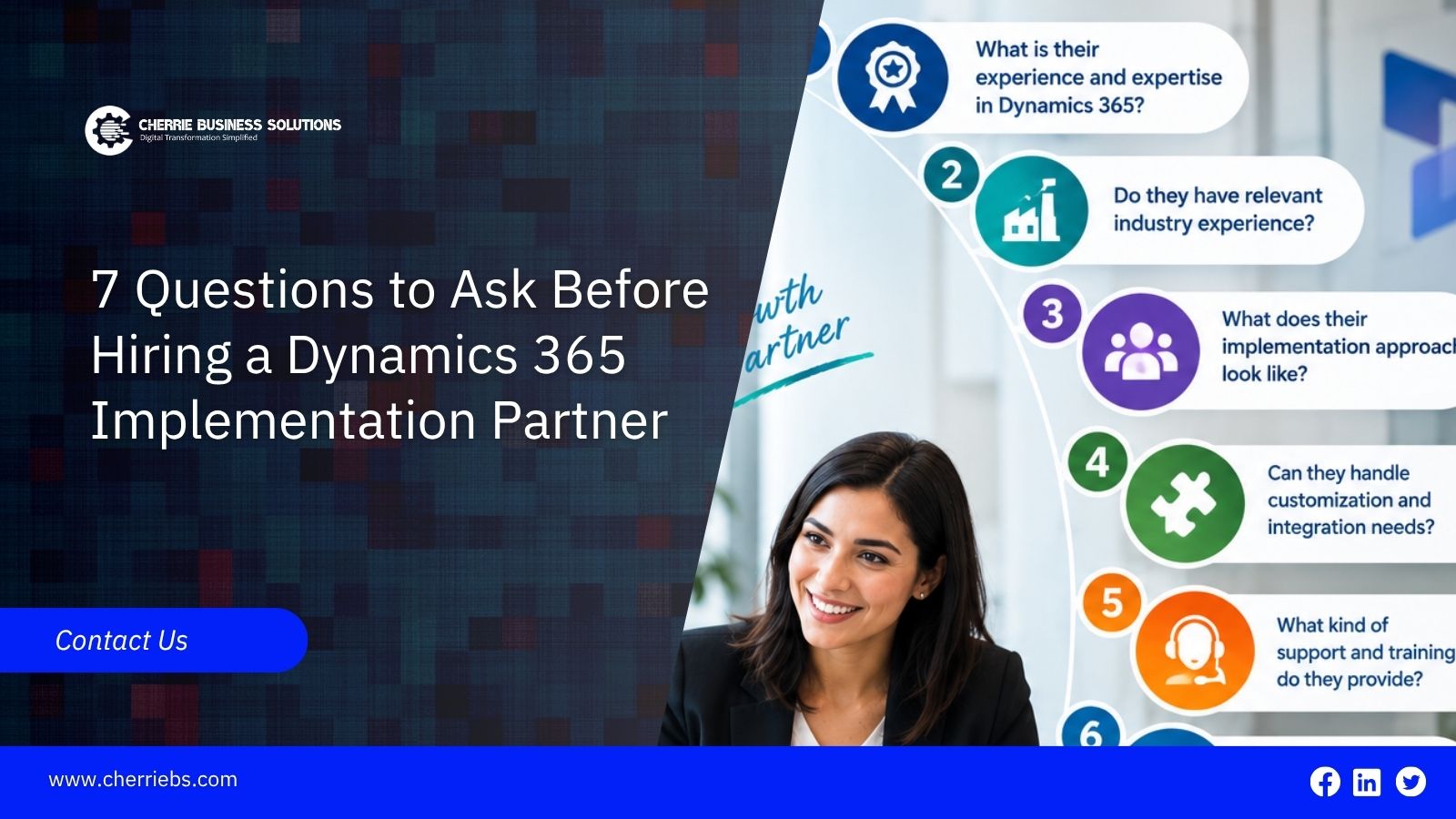
That’s why choosing the right implementation partner requires careful evaluation. Asking the right questions can help you assess their expertise, implementation approach, industry experience, and ability to support your business as it grows.
Here are seven essential questions to guide your hiring decision.
1. How Will You Map Our Specific Industry Operations?
Knowing how to install a software package is very different from knowing how your company actually operates. Microsoft Dynamics contains thousands of different features. A retail clothing store uses a completely different set of those features compared to a facility that manufactures heavy steel parts.
Different industries require completely different technical approaches. Because of this, a professional implementation partner should already understand your daily business vocabulary. If you run a custom fabrication shop, the consulting firm should immediately ask you how your team calculates raw material waste and machine run times. Ask the potential partner to provide real case studies from companies that operate in your exact industry. This proves they can configure the system to solve your specific bottlenecks right from the start, rather than using your project as a paid learning experience.
Finding a team that understands your daily routine is a great starting point. Next, you need to know how they plan to connect this new system to your other tools.
2. How Do You Handle Integrations With Our Existing Software?
Very few companies operate on just one single piece of software. Your business probably uses an external payroll system, a specialized e-commerce website, or specific barcode scanning hardware in the warehouse. Your new ERP needs to communicate with these existing tools securely.
You need to ask the consulting firm exactly how they plan to connect these different programs. A poor partner might suggest building a fragile, custom connection from scratch. A highly experienced Dynamics 365 partner will take a much safer approach. They will use standard Microsoft tools, like Dataverse or secure application programming interfaces, to link your third-party software directly to the ERP. Ask them to explain a recent project where they successfully connected an outside program to Microsoft Dynamics. Their answer will tell you immediately if they understand complex business networks or if they only know how to do basic installations.
Once you know how the systems will connect, you must address the information that will actually live inside the database.
3. What Is Your Exact Strategy for Organizing Our Business Data?
Whether you are upgrading from basic accounting tools or older legacy software, your current records are likely unorganized. You might have duplicate vendor profiles, outdated shipping addresses, and discontinued inventory items scattered across different files. If this unorganized information is uploaded directly into your new system, your financial reports will be completely inaccurate.
You must ask the consulting firm how they handle data preparation. A professional technical team will establish strict cleanup rules long before any files are uploaded. They will sit down with your accounting staff to merge all the different spellings of a single vendor name into one clean file. A smart setup strategy only uploads active paying customers, your current physical inventory counts, and your open bills. Protecting your data accuracy from day one is absolutely required for a successful launch.
With clean data ready to go, you also need to know how the partner plans to build the actual screens your employees will use every day.
4. How Do You Handle Requests for Custom Software Coding?
This is easily one of the most important questions you can ask to protect your long-term technology budget. When a company sets up a new enterprise system, staff members often ask the technical team to make the new software look exactly like their old spreadsheets. While custom programming can achieve this, it is highly unnecessary and massively increases your maintenance costs.
Writing custom code adds heavy complexity to your system. Every time Microsoft releases a standard security update, your custom code requires careful review and expensive fixes. A highly experienced partner will review your daily workflows and find ways to use the software's built-in standard features instead. By prioritizing standard features, your implementation partner keeps the project moving smoothly and ensures your future software updates are incredibly easy to manage without extra billing hours.
Building the software correctly is a great start. But the entire project relies on your employees actually knowing how to use it safely.
5. Who Actually Tests the System Before We Launch?
The system must be thoroughly tested by the people who process the actual physical work. Ask your potential partner exactly how they manage the testing phase before the software goes live.
A professional implementation partner will build a safe, separate practice environment. They will ask your accounting clerks and shipping managers to sit down and process their heaviest daily workloads inside this practice system. They will actively encourage your employees to navigate the screens and try different scenarios. If a shipping manager realizes a specific tracking button is missing, the partner can adjust the screen layout weeks before the actual launch date. Testing builds massive employee confidence before the real work begins.
When the staff is finally ready, you need to know what happens on the very first day the system actually turns on.
6. What Kind of Support Do You Provide on Launch Day?
The first few days of using a brand new system always involve a major learning curve for your staff. Even with perfect practice runs, employees will forget their login passwords, feel confused over a new screen layout, or forget how to print a standard shipping label. You need to ask the implementation partner how they manage post-launch support.
A reliable partner includes a strict support period directly in their contract. This is usually a thirty-day window where their technical consultants remain on active standby specifically for your company. If your finance director gets a sudden error message while trying to pay a large vendor bill, the support team jumps on a phone call instantly to fix the exact step. Having this immediate help stops minor initial confusion from turning into a complete operational delay.
Finally, you need to ensure your company maintains total control long after that initial support window closes.
7. Who Owns the Administrative Rights When the Project Ends?
It is absolutely important to establish clear administrative boundaries before the project ever begins. You must ask the partner to confirm in writing that your business holds total ownership of the entire system.
Your company should purchase the Microsoft Dynamics licenses directly under your own corporate name. Your internal IT manager should hold the absolute master administrative rights at all times. Furthermore, a truly great partner will actually train your internal technology team on how to handle basic daily tasks, like adding a new warehouse user or resetting a locked password. They empower your company to run the software independently, ensuring you have total control over your own digital workspace.
Also Read: What Are the Benefits of Working with an Authorized Business Central Partner for Finance Operations?
Conclusion: Building a Confident Path to Go-Live
Implementing a modern digital workspace completely transforms how fast your company can scale. Microsoft Dynamics 365 ERP systems give you the exact tools you need to stop doing manual data entry and start making highly informed growth decisions. However, reaching that goal requires a technology partner who values honest communication, clean data, and strict employee testing. Asking these seven questions will help you evaluate your options clearly and highlight the true technology professionals.
At Cherrie Business Solutions, we welcome these exact questions. As an authorized Microsoft Dynamics 365 ERP implementation partner, we specialize in guiding growing businesses through secure, highly organized software implementations. Our team evaluates your specific industry requirements, connects your third-party software securely, and strictly limits custom coding to protect your long-term budget. We stand by your employees through rigorous testing and provide the immediate daily support you need during a critical launch. Contact Cherrie Business Solutions today to discuss your next big technology project and hire a partner you can completely trust.