
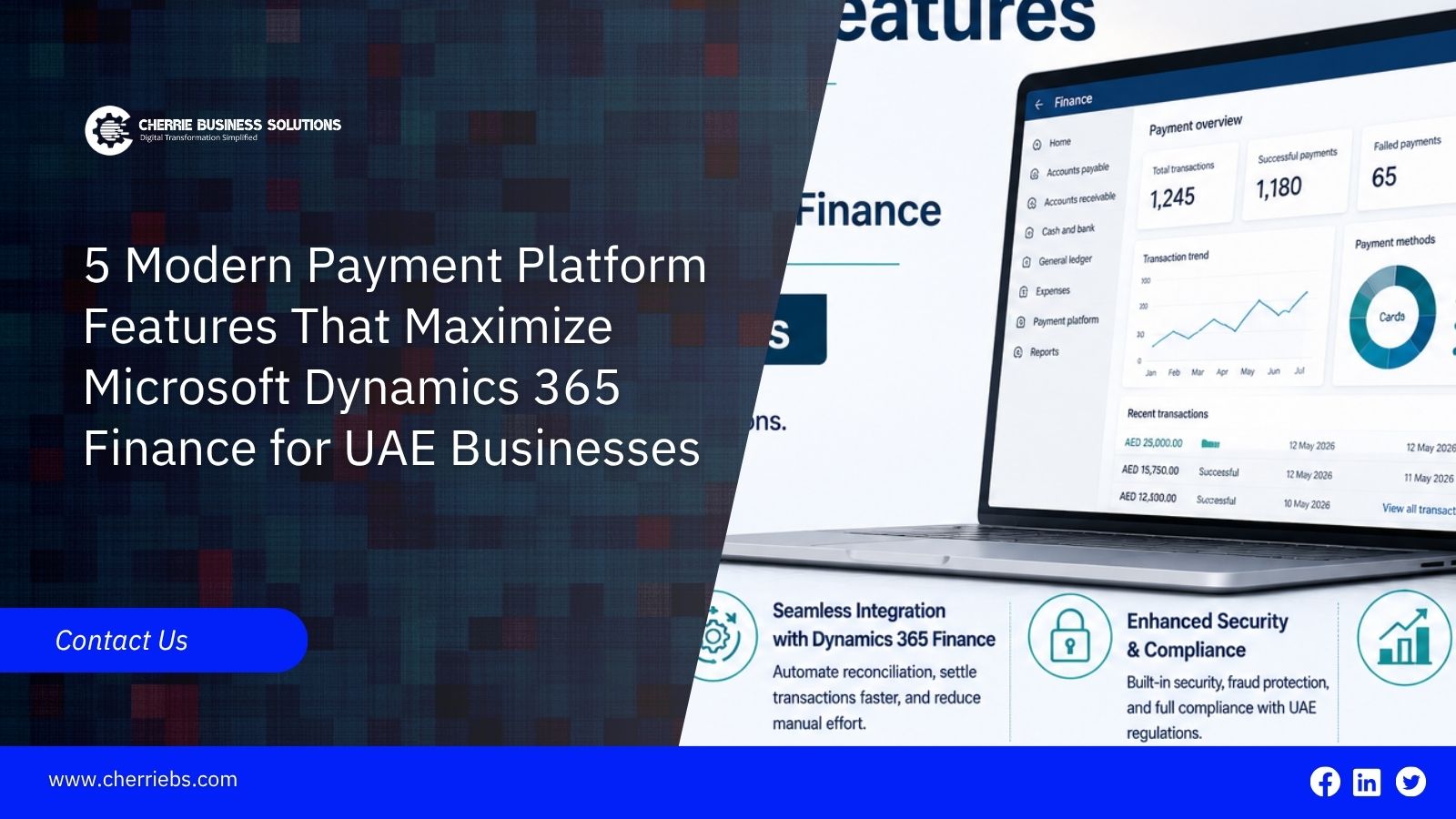
The latest UAE electronic invoicing mandate represents a major shift in how companies handle their billing. Microsoft Dynamics 365 Finance offers a brilliant foundation to generate these compliant tax documents seamlessly. However, creating a proper invoice is only step one in the cash cycle. Getting the funds into your bank account quickly requires a strong bridge between your accounting software and your payment processor.
Many organizations still rely on outdated legacy systems that treat accounting and payment collection as two completely separate tasks. When you connect your Dynamics 365 Finance ERP directly to an advanced payment gateway, you create a highly efficient collection engine. This setup allows your finance department to operate with incredible accuracy and speed.
Throughout this blog, we will look at five specific modern payment platform features that help your team automate cash flow and maximize the value of your enterprise software. Upgrading your financial technology ensures you stay ahead of regional compliance rules while boosting your operational efficiency.
Feature 1: Embedded Payment Links for Faster Invoice Collections
Sending a compliant tax document does not guarantee a fast payment. Clients often leave static PDF invoices sitting in their inboxes for weeks before initiating a bank transfer. A modern integration changes this behavior completely by placing an embedded payment link directly onto the digital bill. When your team issues an e-invoice from Microsoft Dynamics 365 Finance, the gateway automatically adds a secure click-to-pay button right inside the document.
Think about a building materials supplier in Dubai sending a large invoice for a commercial project. The buyer receives the email, clicks the link, and pays with a corporate card on the spot. The payment platform processes the charge and sends a signal back to your ERP. The system marks the invoice as paid immediately.
Removing this friction has a measurable impact on cash flow. A 2025 Euler Hermes study found the average global DSO sits around 65 days, and B2B buyers increasingly favor sellers who make paying easier at the point of invoice.
This simple addition helps reduce your days sales outstanding significantly. It also creates a much more professional buying experience for your clients. They do not have to log into separate banking portals, download attachments, or double-check routing numbers. Everything they need to clear their balance is provided in one single click. Your accounts receivable team spends less time chasing late payments because the barrier to entry for the customer is completely removed.
Feature 2: Automated Multi-Currency Reconciliation for Global Trade
Operating a business in the UAE means dealing with international clients constantly. Your finance department probably handles Dirhams, Euros, and US Dollars every single day. Trying to match a large bulk bank deposit against various foreign invoices takes hours of spreadsheet work. It also creates room for calculation errors. A modern payment integration feeds detailed settlement data straight into your accounting software to solve this.
When the daily transactions settle, the gateway pushes the full breakdown into Dynamics 365 Finance. It separates the original transaction amount from processing fees and logs the precise exchange rate used at the time of purchase. Your team skips the manual math entirely. The software posts clean data directly to your general ledger, keeping your international accounts perfectly balanced.
This feature helps prevent the classic end-of-month rush where accountants try to figure out why a deposit is short by a few dirhams. The software explains every single penny automatically. By automating the reconciliation process, your finance managers can dedicate their time to forecasting and budget analysis instead of basic data entry.
Feature 3: Secure Digital Tokenization for Repeat Corporate Buyers
Keeping raw credit card numbers on your company servers introduces serious compliance risks. Middle Eastern data privacy laws require strict protection of financial details. You need a safe method to bill your repeat clients quickly without holding sensitive information on your local network. Digital tokenization handles this security requirement effortlessly.
When a new buyer makes a purchase, the payment platform encrypts their card details in an offsite vault. The gateway then passes a randomized digital token back to Microsoft Dynamics 365. This token acts as a permanent reference code. If the client orders again next week, your sales staff selects their profile and clicks charge. The ERP sends the token back to the gateway. The payment clears instantly, and your company never touches the actual card number.
The downside of skipping this step is steep. IBM's 2025 Cost of a Data Breach Report, research conducted by the Ponemon Institute, puts the global average cost of a breach at AED 16.3 million, a risk tokenization is specifically designed to remove.
Hackers cannot reverse engineer a digital token to steal credit card data. This technology helps your business maintain strict Payment Card Industry compliance while still providing a frictionless checkout experience for your best customers. Your IT department also benefits because they do not have to build complex security firewalls just to store customer billing data.
Feature 4: Unified Commerce Dashboards Across All Sales Channels
Corporate purchasing happens across multiple channels. A client might place an order on your website, call a sales representative, or visit a physical branch. Using separate payment processors for your website and physical locations traps your data in isolated systems. This setup complicates your end-of-month reporting and limits your visibility into buying trends.
Bringing a unified payment platform into your enterprise software establishes a single source of truth. Every transaction lands in one central dashboard inside Dynamics 365 Finance. This approach is highly useful for processing returns or adjusting orders. If a buyer purchases heavy equipment online but returns it at a physical branch, your staff finds the record instantly. The system reads the original payment method and issues the refund accurately without causing duplicate accounting entries.
Your finance team gets a complete view of all incoming revenue, regardless of where the sale originated. Management teams can use this unified data to see which sales channels perform best during specific quarters and adjust their business strategies accordingly.
The revenue upside backs this up. A Harvard Business Review study of 46,000 shoppers found omnichannel customers spend more on every shopping occasion compared to single-channel buyers, whichever channel they land on.
Feature 5: Automated Retry Workflows to Manage Failed Transactions
Expired cards and blocked transactions disrupt cash flow. This happens frequently for businesses running on recurring service contracts or monthly retainers. Historically, a failed charge meant someone in the finance office had to call the client and ask for new billing details. It wastes staff time and creates an uncomfortable conversation.
Modern integrations remove this awkward step using intelligent routing and automation. If a charge fails due to a temporary authorization issue or spending limit, the platform can automatically retry the payment based on predefined retry schedules. If a card is permanently declined due to expiration, the integration triggers an automated workflow inside Dynamics 365. It temporarily pauses the service plan and emails the client a secure link. They update their own billing details privately on their own device.
You recover the revenue without requiring your accounting team to make a single phone call. This hands-off approach helps protect your customer relationships while securing your monthly cash flow. You prevent accidental service cancellations and ensure your business retains its hard-earned recurring revenue.
Conclusion
Connecting your core accounting software to a top-tier payment gateway is a highly practical way to modernize your business operations. By pairing the UAE e-invoicing standards with automated collections, your finance department can step away from manual data entry. They can focus on strategic financial planning instead. The features we covered reduce administrative work while giving your clients a much better purchasing experience.
A modern integration transforms Microsoft Dynamics 365 Finance from a standard accounting tool into a proactive cash management engine. Reaching this level of automation requires a carefully planned configuration to ensure your general ledger rules remain intact. Proper implementation ensures your tax codes and customer profiles map perfectly to the new payment gateway. As a licensed Dynamics 365 partner in the UAE, Cherrie Business Solutions helps companies align their enterprise software with both local regulations and powerful financial tools. We know the intricacies of corporate accounting and work directly with your team to build safe, automated workflows. Contact our technical consultants today to map out a clear Dynamics 365 Finance payment integration strategy for your business.